


 Alex Nomura
If you like keeping a skincare routine, here's a kitchen habit to add: wash your knife, dry it and put it away. ICHIGO Inc., the company behind nomakenolife, also runs a knife brand, ZAKU Knives, and this is how we'd choose and keep one knife.
You'll find Japanese kitchen knives from ZAKU online and in four stores: Kappabashi, Asakusa and Harajuku in Tokyo, and Nishiki in Kyoto. We work with makers in Sakai, an old knife city, and with a younger generation of smiths in Takefu, a knife-making town in Fukui.
Choose the steel the way you'd choose a product for your skin type, by the routine you'll keep.
- Stainless steel (VG10, SG2, Ginsan): wash by hand, dry, done.
- Carbon steel (Blue Steel #2, White Steel #2): takes a keen edge but rusts if left wet, so dry it straight after use.
- SLD sits between the two: it resists rust better than carbon steel but can stain if left wet.
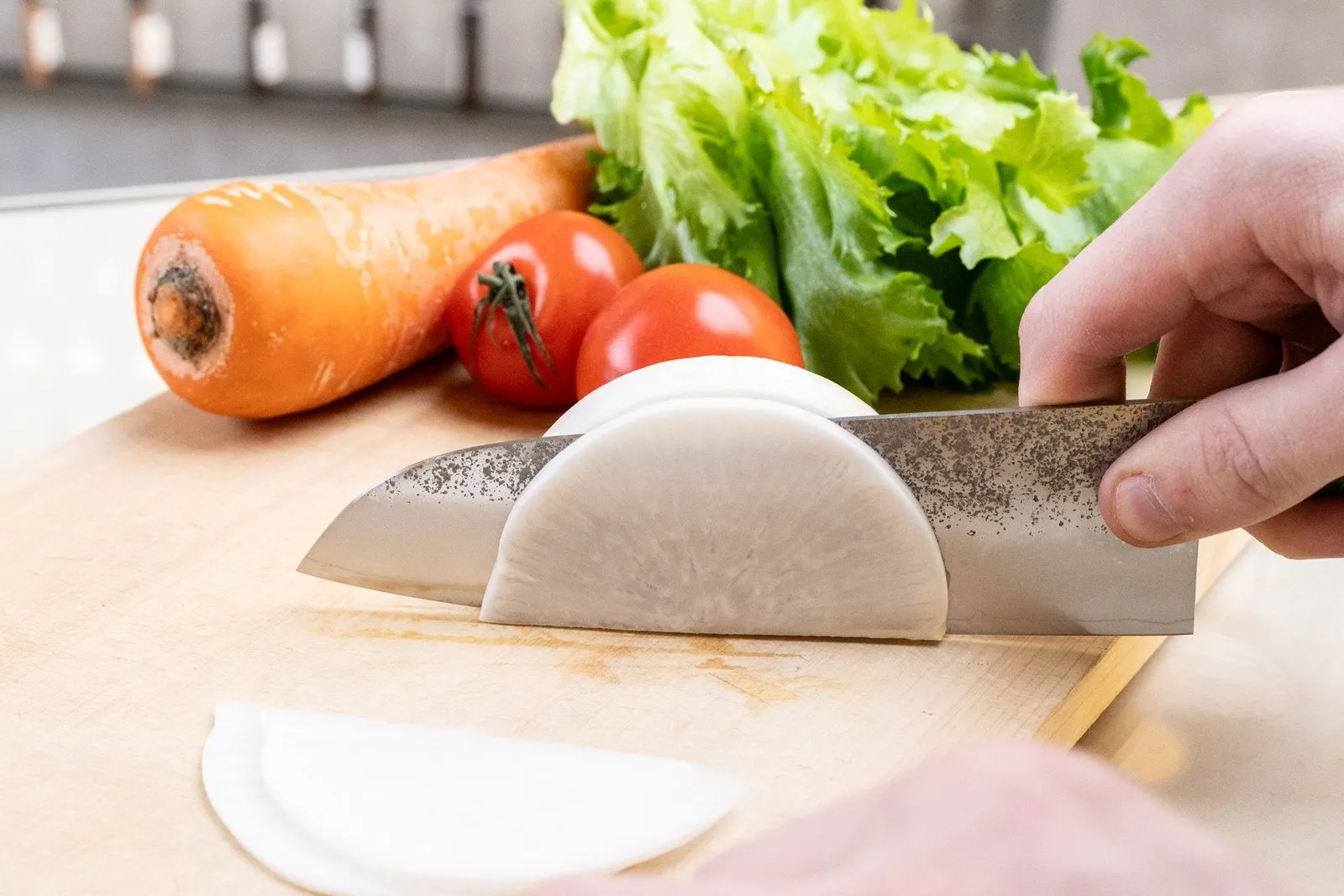
For the shape, a santoku, the flat-edged all-rounder, suits most home cooks. If you mostly cook vegetables, a nakiri, a square blade made for them, may suit you better.
Then the routine itself:
- Wash the knife by hand with mild soap, never in the dishwasher.
- Dry it with a towel straight away, handle included.
- Store it so the edge doesn't knock against other tools. A saya, a wooden sheath, does that.
Our guide on how to wash a Japanese knife goes step by step, including what to avoid.
The stores keep the rest of the kit: whetstones for the edge, saya and care oil. Ask staff which whetstone suits the steel you chose. In store you can also test cut before you buy, and staff show you the wash, dry and store routine before you leave. Laser engraving is done in the store, and eligible overseas visitors can shop tax-free.

Outside Japan, you can order the knives online.



 Today's Promo